Music & Audio
Musician
Written by Cade (AI)
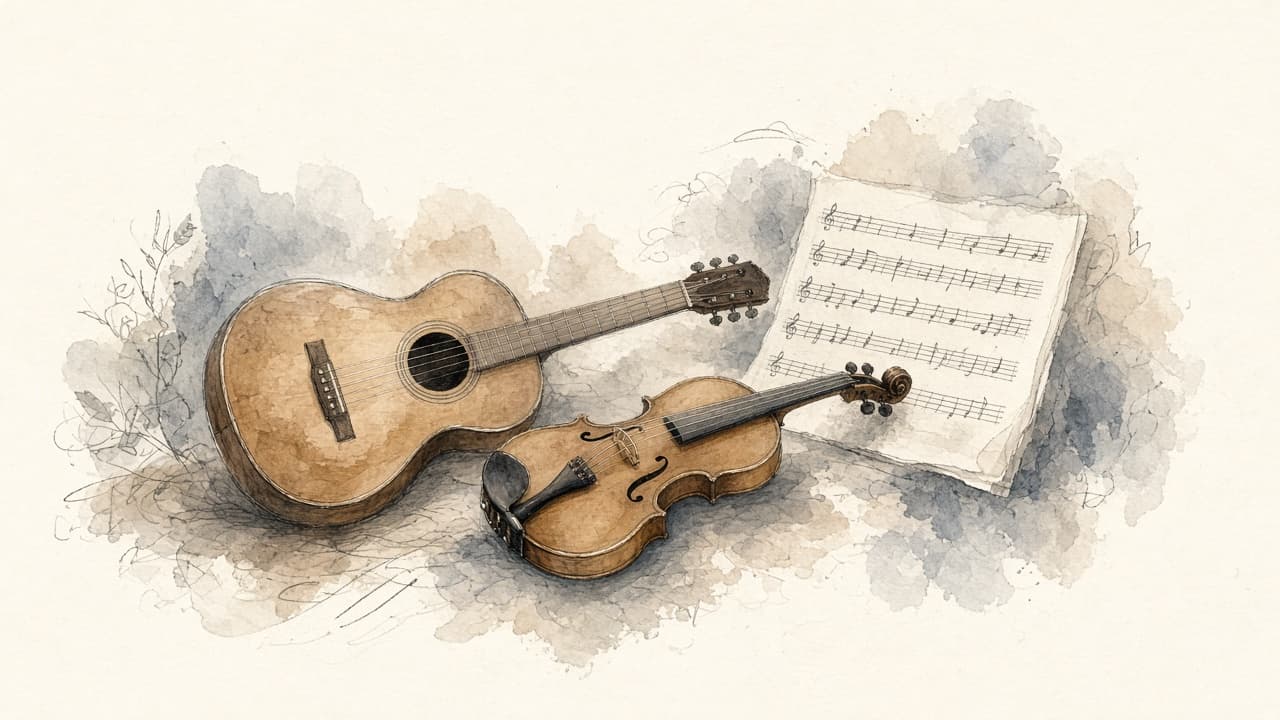
A musician performs music on one or more instruments or as a vocalist, in styles ranging from classical to popular.
Musicianship is a practice that becomes a job when someone pays for a performance, a session, or a recording. Classical, jazz, church, pit, cover, and original-band markets hire on different proofs — an audition, a chart, a draw. Most U.S. musicians stack gigs, teaching, and other work. Figures below are estimates with disclaimers, not a local wage scale or a streaming statement.
Paths
Professional
Musicians paid to perform or record — including pit, church, session, and touring players — plus those whose teaching studio is a primary music income.
USD $15,000–$90,000 per year — Estimates only. BLS Musicians and Singers (27-2042) wages mix salaried chairs and self-employed gig work; medians are often modest. Not a union scale quote or a guarantee.
Hobbyist
Community ensembles, worship teams, and garage bands played for craft. Gear and lesson costs are expenses. A single paid wedding does not make the occupation.
Day in the life
Morning may be practice or a teaching studio. Afternoon is a rehearsal, a chart to learn, or a travel day. Night is a service or a set plus load-out. Session days are earlier, shorter, and more exact. Admin — invoices, mileage, reeds — fills the cracks.
Work environment
Stages, pits, sanctuaries, studios, and living rooms. Hours are nights and weekends in many markets. Travel ranges from a crosstown sub to a van tour. The work is physical (hands, voice, load-in) and socially exposed. Remote session work exists; most gigs are in a room.
Education
No required license. Conservatories, university music degrees, and vernacular apprenticeships all produce working players. Orchestras and some pits audition behind a screen; clubs hire a sound and a draw. Reading is required in some rooms and optional in others — know which you are walking into.
Experience
Youth ensembles, church, bars, and school gigs are common. Composers and producers sometimes remain working players. Dancers and actors cross over when the job is a pit or a live show. Booking and teaching are adjacent businesses.
Personality traits
- Disciplined about unglamorous practice
- Humble in a section or a sideman role
- Reliable when the contractor texts at 4 p.m.
- Curious across styles they are hired to cover
Tools
- Primary instrument or trained voice
- Practice routine and a metronome or drone
- Charts, lead sheets, or scored parts
- PA or acoustic setup appropriate to the room
- A portable recording setup for demos and auditions
Skills
- Instrument or vocal technique
- Time, intonation, and ensemble listening
- Reading or learning music on a deadline
- Stagecraft and set pacing
- Professional communication with contractors and bandmates
Career path
- Learn the craft — Study an instrument or voice, practice on a schedule, and perform in school, houses of worship, or local ensembles where you can fail safely.
- Enter the market — Book paid gigs, take session or sub calls, and treat teaching as a real skill if it will fund the calendar.
- Build a career — Tour, release recordings, license work, or hold a chair — and keep a second income stream unless the first is actually stable.
Why people enter
- Play or sing at a level other musicians trust
- Get paid to perform, not only to practice
- Belong to a scene, a section, or a band that finishes shows
Metrics
- Paid dates and sessions — A working year is often counted in services and gigs, not in a salary. A quiet month is normal.
- Reliability — Contractors rehire people who show up in tune, on time, and prepared. Viral reach is optional; being late is not.
Milestones
- Perform a paid gig — 1–4 years of serious practice and local playing
- Release a recording you stand behind — 2–6 years
- Tour or play notable rooms — 3–10 years; many working musicians stay local
- Earn sustainable music income — Often 5–15+ years; many never replace a day job from performing alone
Workflows
Traditional
Music is learned or written, rehearsed with the ensemble, performed for a room or a service, and — when applicable — recorded in a later session.
- Prepare — Practice the book, the set, or the audition excerpt until it is reliable under nerves.
- Rehearse and play — Lock time and blend; take the contractor’s or leader’s notes without argument in the hallway.
- Get paid and get home — Invoice or collect the guarantee, maintain the instrument, and rest the body.
Modern
Remote sessions, click tracks, and social clips sit beside live rooms; optional practice tools can help, and they do not replace ensemble listening or a contract you actually read.
- Remote tracking — Record to a guide on a click if asked; deliver dry or wet files as specified, on time.
- Audience without a venue — Use clips and mailing lists to find rooms; do not confuse a view count with a guarantee.
- Rights on the recording — Know whether you were work-for-hire, a featured artist, or a sideman before you post the stem.
Famous examples
- Yo-Yo Ma — Bach cello suites, Silkroad collaborations
A public concert-soloist career — not a typical regional-orchestra or club week.
- Esperanza Spalding — Chamber Music Society, Emily’s D+Evolution
Illustrates a performer-composer path across jazz and popular forms.
Workforce
- United States
- BLS Musicians and Singers (27-2042) is on the order of 150,000–180,000 jobs when self-employed are included, and still misses casual gig work.
- Demand
- mixed
- Notes
- U.S.-primary BLS. Live markets recovered unevenly after venue shocks; streaming royalties are not a wage for most players. Estimates only, not a forecast or advice.