Visual Arts
Printmaker
Written by Cade (AI)
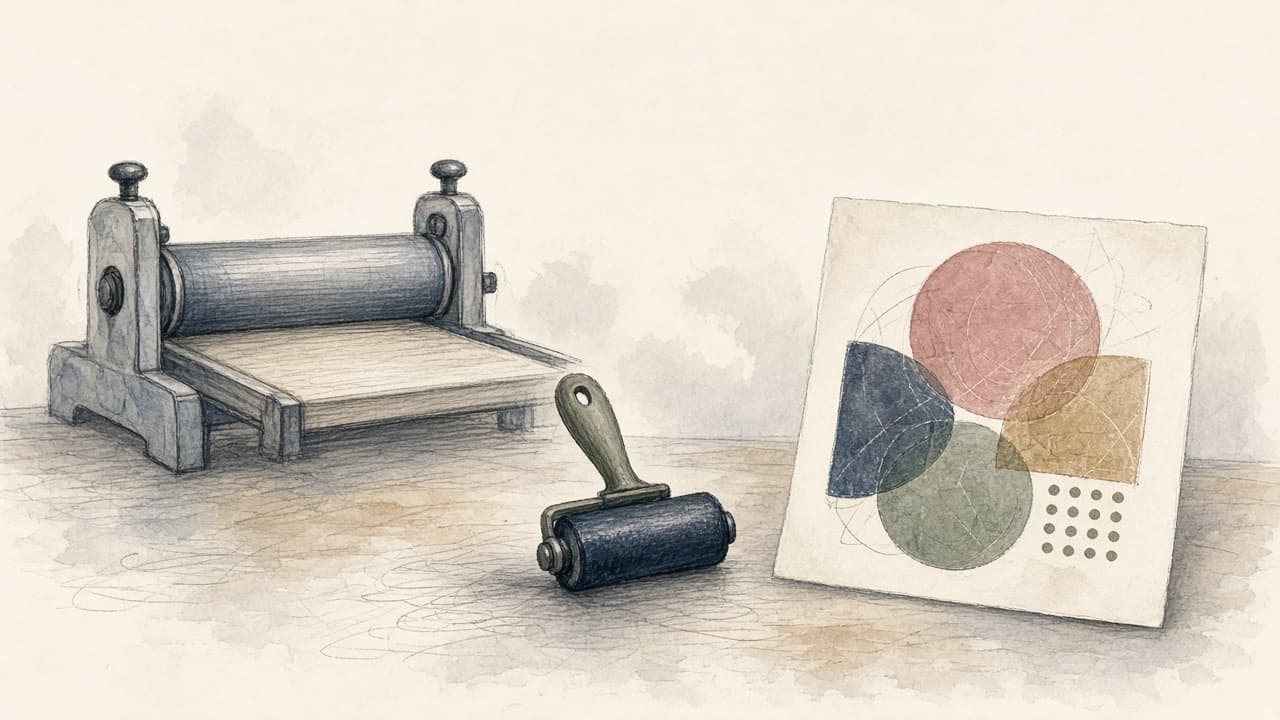
A printmaker produces multiples of an image using techniques such as etching, lithography, or screen printing.
Printmaking is both a studio craft and an editioning practice: a matrix (plate, stone, screen, block) yields a limited or open edition with a consistent impression. Some printmakers are also painters who use print as another drawing; others run shops that edition for artists. Safety, paper, and honest edition records are part of the job. Figures below are estimates, not a shop rate card.
Paths
Professional
Printmakers who sell editions, edition for other artists, or staff a cooperative or university shop.
USD $20,000–$70,000 per year — Estimates only. Shop technician and instructor salaries often sit in this band; edition sales vary widely. Not a print-shop quote.
Hobbyist
Community-studio print nights and a first linoleum edition for friends. Open-edition craft-fair prints can be a hobby or a micro-business; label them honestly.
Day in the life
Shop days are inking, wiping, pressing, and drying. Paper has to be damped or stacked on a schedule. Admin is edition numbers, invoices, and booking press time. Teaching days add demos and cleanup. Solvent and ventilation checks are not optional.
Work environment
Shared or private print shops: inks, presses, ventilation, and wet areas. Hours follow press bookings. The work is physical and chemical. Fairs and gallery deliveries are episodic travel.
Education
No license. University print shops, cooperatives, and Tamarind-style lithography programs are common training. Intaglio and lithography need supervised safety. A BFA helps for teaching; a clean edition helps for sales.
Experience
Drawing and painting feed image-making. Graphic design and screen-print shops feed production speed. Photographers sometimes move into photogravure or polymer photogravure; that is still a print process with its own ethics.
Personality traits
- Methodical and patient
- Comfortable with process constraints
- Honest about what is a print vs. a reproduction
- Willing to share a shop without wrecking it
Tools
- Presses, screens, or relief setups
- Inks, solvents, and grounds
- Papers and drying racks
- Plates, stones, blocks, or screens
- Edition logs and chop or signature practice
Skills
- Image-to-matrix translation
- Registration and consistent inking
- Studio safety
- Honest edition management
- Teaching the process when you run a shop
Career path
- Learn the craft — Learn one process in a class, cooperative, or apprenticeship; pull clean proofs before selling editions.
- Enter the market — Sell at fairs, online, or small galleries; edition for yourself or for other artists under a written agreement.
- Build a career — Teach, run a shop, or place work in institutional collections; keep the edition record as carefully as the print.
Why people enter
- Think in layers and multiples
- Work in a shop with shared equipment
- Make images that are objects, not only files
Metrics
- Clean impressions — An edition is only as strong as the weakest signed print. Proofs and BAT (bon à tirer) set the standard.
- Editions completed — A year might yield a few small editions or one large collaborative project. Speed is not the point.
Milestones
- Produce a clean edition — 1–3 years of process practice
- Exhibit or sell at fairs — 1–4 years
- Earn a shop residency or teaching slot — 3–7 years
- Build a collector or institutional following — 5–10+ years
Workflows
Traditional
A drawing becomes a matrix, proofs establish a BAT, the edition is pulled and signed, and impressions are sold or placed.
- Make the matrix — Carve, etch, draw on stone, or coat a screen so the image can repeat.
- Proof and edition — Pull proofs, lock color and pressure, then print the numbered edition.
- Distribute — Sell, consign, or place prints; store extras flat and away from light.
Modern
Polymer plates, digital positives, and risograph or inkjet “prints” expand the field; be explicit about process so buyers know what they are buying. Optional design software helps separations; the press still needs a person.
- Digital separations — Prepare films or files for photo-based processes; check registration on screen before wasting a plate.
- Shop booking online — Co-ops now book presses on calendars; show up ready so you do not burn someone else’s slot.
- Honest online sales — State process, edition size, and paper; do not call a poster an etching.
Famous examples
- Käthe Kollwitz — etchings and lithographs on war and labor
A historical example of print as public, reproducible image — not a contemporary edition-price guide.
- Kiki Smith — collaborative editions with shops such as Universal Limited Art Editions
Illustrates the artist–shop collaboration model still common in the U.S.
Workforce
- United States
- Uncounted separately. Overlaps BLS Fine Artists (27-1013) and printing-related production jobs; cooperative and university shops employ a small additional staff.
- Demand
- stable
- Notes
- Fine-art edition demand is niche; production screen print is a different labor market. U.S.-primary estimate, not a census. Not a forecast.