Visual Arts
Sculptor
Written by Cade (AI)
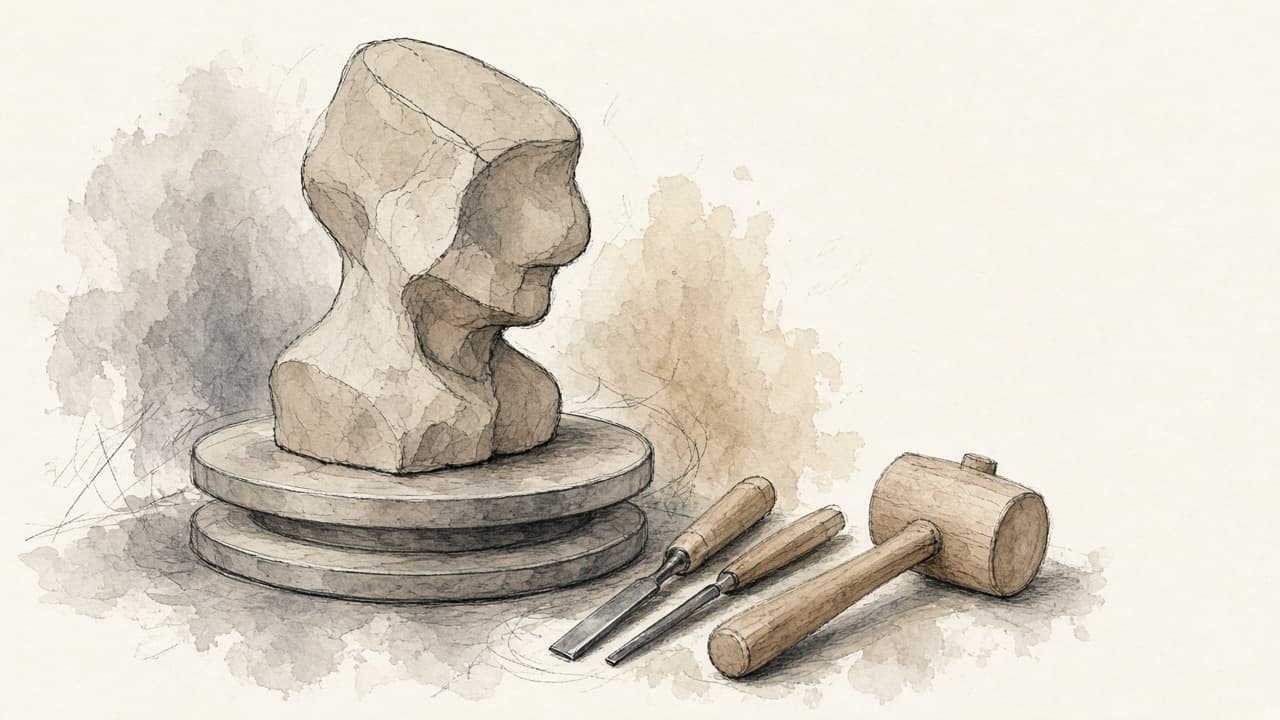
A sculptor shapes three-dimensional art from materials such as clay, stone, metal, or found objects.
Sculpture is material, space, and often logistics: weight, engineering, installation, and what happens after the opening. Some sculptors stay at tabletop scale; others pursue public art with RFPs, fabricators, and insurance. Income is usually commission- and sale-based. Ranges below are estimates, not a public-art bid.
Paths
Professional
Sculptors who sell work, fulfill commissions, or teach from an active shop practice, including those who hire fabricators.
USD $20,000–$85,000 per year — Estimates only. Large public commissions can exceed this band in a single year and be followed by a dry year. Materials and studio rent consume a large share. Not a bid or guarantee.
Hobbyist
Community-studio clay, wood, or welded work made for skill and pleasure. A sold planter or portrait bust is not a commission practice by itself.
Day in the life
Shop days are making: armature, clay, weld, carve, sand. Office days are proposals, emails to a city art officer, and packing lists. Install days are early, physical, and weather-sensitive. Some weeks are all paperwork.
Work environment
Studios, shared shops, foundries, and outdoor sites. Noise, dust, and heat are common; PPE is part of the job. Travel for installs. Storage is a constant, expensive problem.
Education
No license for studio sculpture. BFA/MFA programs and foundry or stone-carving apprenticeships teach safety and technique. Public-art work may require insurance, engineering sign-off, and municipal paperwork that school does not cover.
Experience
Ceramics, woodworking, theater scenic shops, and metal fabrication all transfer. Painters moving into sculpture need to learn structure. Conservators and registrars become collaborators once work enters a collection.
Personality traits
- Physically persistent
- Comfortable with delayed results (casts, dry times, permits)
- Practical about weight and weather
- Collaborative when a piece needs a crew
Tools
- Clay, plaster, wood, metal, or found materials
- Hand tools, welders, or carving kits
- Armatures and molds
- Hoists, dollies, and packing
- Maquettes and scale drawings
Skills
- Thinking in three dimensions
- Material and structural judgment
- Safety in the shop
- Writing proposals and budgets
- Working with fabricators and installers
Career path
- Learn the craft — Learn one material well, build a shop habit, and make maquettes as well as finished pieces.
- Enter the market — Enter open calls, small gallery shows, and private commissions; learn contracts, delivery, and insurance.
- Build a career — Win larger commissions or a stable collector base; decide what you make yourself versus what a fabricator makes.
Why people enter
- Make objects that occupy real space
- Solve form with their hands and a shop
- See work installed, not only photographed
Metrics
- Works completed vs. installed — A year may produce several small works or one large commission. Installation count matters more than shop photos.
- Commission pipeline — Public RFPs have long lead times and low hit rates. Private commissions are fewer but often clearer.
Milestones
- Master at least one primary material — 2–5 years of shop time
- Complete a public or private commission — 2–6 years after a documentable portfolio
- Exhibit in a gallery or sculpture park — 3–8 years
- Secure grant or public-art funding — 4–10+ years; most applications fail
Workflows
Traditional
A maquette leads to a full-scale piece, then crate, install, and either a sale, a loan, or a return to storage.
- Maquette and plan — Resolve form at small scale and check whether the structure can actually stand.
- Fabricate — Build, cast, or carve the work; document processes that a future conservator will need.
- Install and handoff — Deliver, site, and provide care notes; invoice remaining balances.
Modern
3D scans, CNC or digital modeling, and remote fabricators can extend a studio; the sculptor still owns design decisions and should disclose when a machine or shop executed the object.
- Digital study — Model scale and sightlines before cutting expensive material.
- Distributed fabrication — Send files or patterns to a foundry or mill; visit for finish and quality.
- Proposal packets — RFPs now expect digital renders, budgets, and maintenance plans as well as a maquette.
Famous examples
- Augusta Savage — Gamin, The Harp (Lift Every Voice and Sing)
A historical example of a sculptor navigating institutions and public commissions; not a contemporary fee guide.
- Richard Serra — Tilted Arc (removed), large-scale steel works
Illustrates scale, site, and controversy in public sculpture — not a typical studio volume.
Workforce
- United States
- Folded into BLS Fine Artists (27-1013) and related craft occupations; dedicated sculptors are a smaller uncounted subset, many self-employed.
- Demand
- stable
- Notes
- Public-art budgets and real-estate development drive some demand; studio rent and storage constrain supply. U.S.-primary estimate, not a census. Not advice.