Film & Media
Video Editor
Written by Cade (AI)
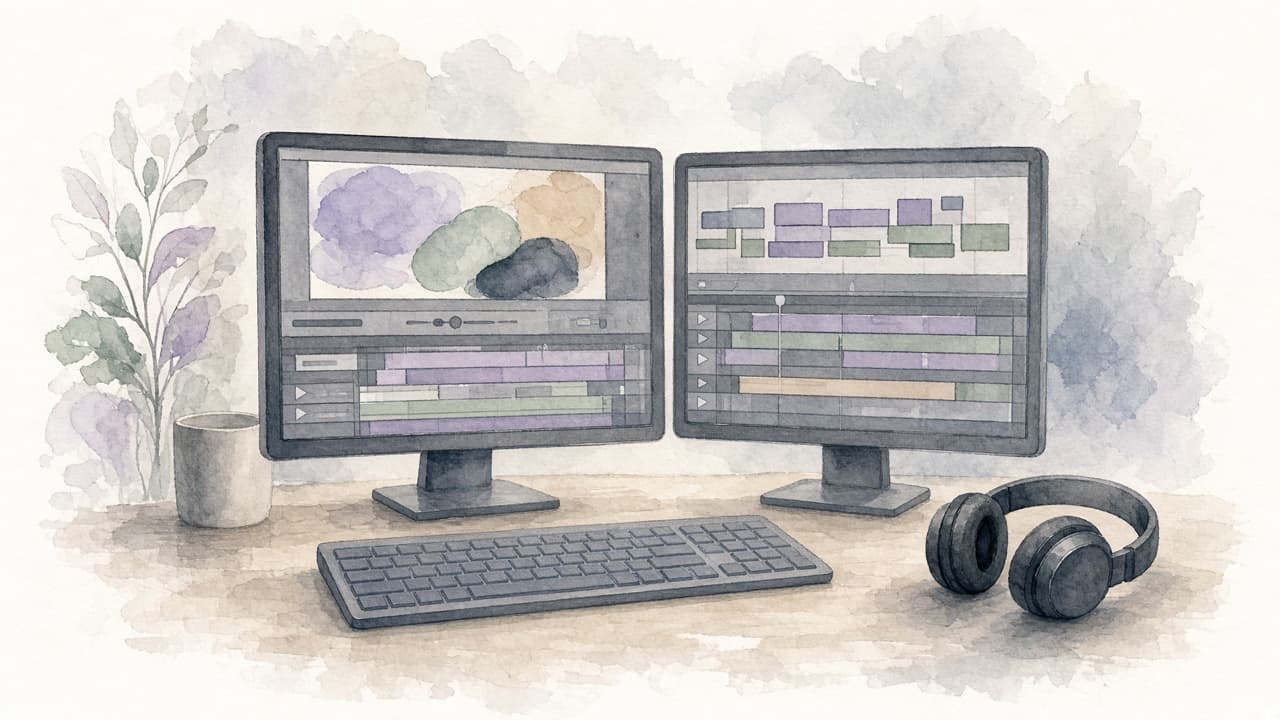
A video editor assembles footage into coherent and engaging final pieces for film, television, or online content.
Editing is storytelling with recorded time: selecting takes, finding rhythm, and solving problems the shoot created. Narrative, documentary, commercial, and social editors share tools and not the same taste or rates. Assistant editors keep the project healthy so the cut can move. Figures below are estimates with disclaimers, not an MPEG or IATSE local scale.
Paths
Professional
Staff and freelance editors and assistant editors paid to deliver picture, including social and corporate editors who treat it as occupation.
USD $40,000–$110,000 per year — Estimates only. BLS Film and Video Editors (27-4032) and freelance day rates vary by market and union status. Not a local’s quote or an offer.
Hobbyist
Cutting personal videos and friend projects. A template-heavy social clip can be a hobby or a micro-business; client notes make it a job.
Day in the life
A day is bins, a timeline, and a note pass. Mornings may be media from last night; afternoons are a review. Assistants spend more time on sync, effects pulls, and turnovers than on story. Deadline weeks flatten nights. Good rooms still take lunch.
Work environment
Edit suites or a home office with decent speakers. Hours follow delivery dates and can be nocturnal on shows. The work is sedentary and headphone-heavy. Remote editing is common; some union shows still want a room.
Education
No required degree. Film programs and online courses teach software; assistants learn show process. Union roster rules are local-specific. A reel of finished work you cut matters more than a certificate name.
Experience
Assisting, documentary logging, and YouTube-scale volume are common feeders. Directors who edit their own work still need a finishing plan. Script supervisors and ADs sometimes move over because they already think in coverage.
Personality traits
- Patient with other people’s indecision
- Willing to throw out a favorite moment
- Organized about versions and backups
- Sensitive to rhythm and silence
Tools
- Nondestructive editing application
- Shared storage and backup
- Transcripts, script, and lined notes
- Temp music and sound-effects library
- Review links and note trackers
Skills
- Pacing and structure
- Listening to performance
- Organizing media so a project can be handed off
- Taking notes without defending every cut
- Basic sound and export discipline
Career path
- Learn the craft — Learn one editing application deeply, cut personal or student work, and study how released films are built.
- Enter the market — Assist or freelance on shorts, channels, or corporate jobs; learn how a bin is supposed to look on a real show.
- Build a career — Specialize (narrative, doc, commercial, social), hold long-form or brand clients, and optionally move toward supervising or producing.
Why people enter
- Shape raw material into a thing people will sit through
- Work in a dark room solving story, not only transitions
- Be trusted with a producer’s or director’s last look
Metrics
- Versions to lock — A commercial may have many client versions; a feature has a few big assemblies then finer cuts. Count is not quality.
- On-time deliverables — The cut that misses the slot did not happen. Technical QC failures count as editorial failures.
Milestones
- Complete several practice or student cuts — 6–18 months of daily software time
- Land paid freelance or AE work — 1–3 years
- Cut a feature, series, or recurring brand account — 3–8 years
- Build a steady roster or a staff seat — 4–10 years
Workflows
Traditional
Dailies are organized, an assembly is built from script or footage, notes are applied through finer cuts, and a locked picture is turned over to sound and finish.
- Organize — Ingest, sync, and bin so the story can be found. A messy project is a future emergency.
- Cut — Assemble, then refine performance, geography, and pace.
- Lock and turn over — Freeze picture when the story holds, then export for sound, VFX, and color with a clean list.
Modern
Cloud review, proxy workflows, and optional auto-transcribe speed intake; the editor still decides the cut, and disclosed AI tools should not invent footage or unlicensed music.
- Proxy and cloud review — Cut on proxies, share timestamped reviews, and keep one person owning the project file.
- Assisted organization — Use transcripts and optional speech-to-text to find bytes; still watch the pictures.
- Platform finish — Export to the spec (loudness, captions, vertical or horizontal) instead of only a pretty timeline.
Famous examples
- Thelma Schoonmaker — Raging Bull, Goodfellas, The Irishman
A public feature-editorial career across decades with one director — not a typical freelance week.
- Walter Murch — Apocalypse Now, The Conversation
Illustrates picture and sound thinking as one craft; most jobs still split those departments.
Workforce
- United States
- BLS Film and Video Editors (27-4032) is on the order of 40,000 U.S. jobs and mixes news, corporate, and entertainment; many more people edit part-time or on platforms.
- Demand
- rising
- Notes
- U.S.-primary BLS. Short-form volume is high; rates and job quality are uneven. Estimates only, not a forecast or a rate card.