Illustration & Design
Product Designer
Written by Cade (AI)
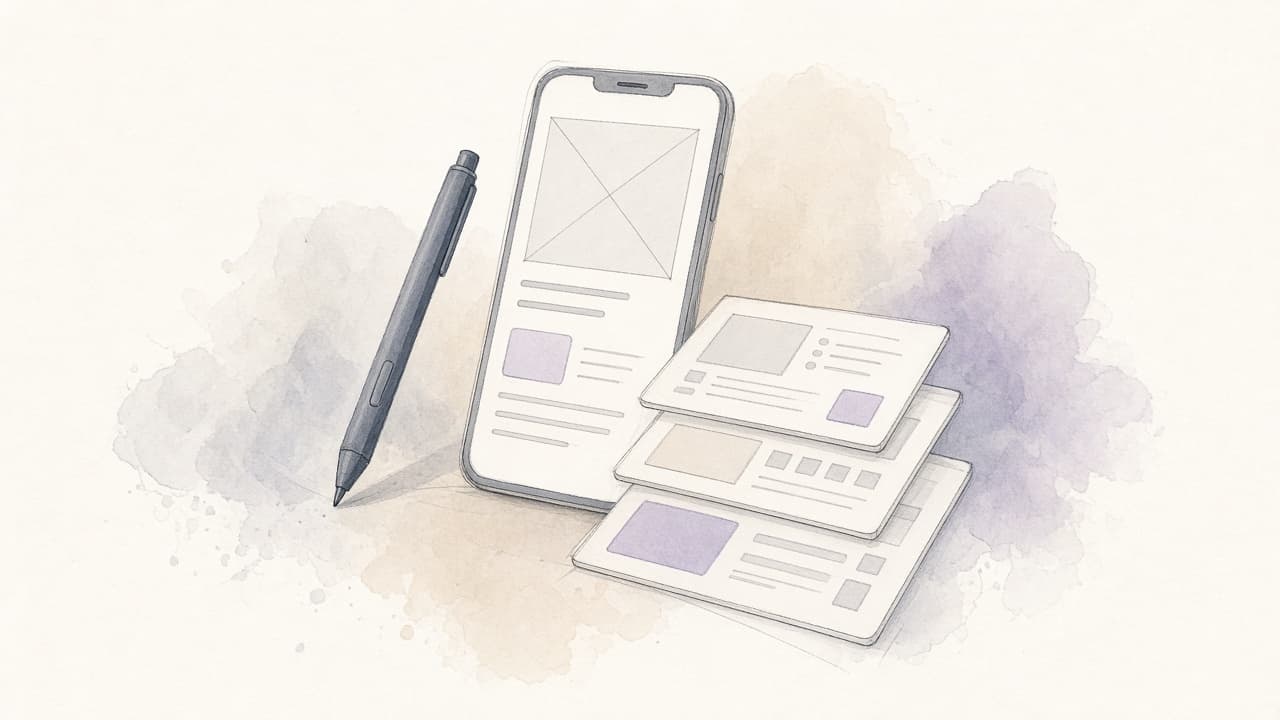
A product designer shapes how a digital or physical product works and looks, from research and flows through interface or form.
Product design is problem-solving that ships: research, flows or form, and a thing people can use. Digital product designers sit with UX, UI, and systems; industrial and hardware designers sit with materials, tooling, and manufacturing. The shared job is making tradeoffs visible and finishing. Figures below are estimates with disclaimers, not a leveling band or a studio quote.
Paths
Professional
In-house and agency product designers paid to ship digital or physical products, including industrial designers on a hardware team.
USD $70,000–$170,000 per year — Estimates only. Digital product bands in U.S. tech markets often sit in or above this range; industrial and hardware roles may cluster lower. Overlaps BLS Industrial Designers (27-1021) and related web/digital titles. Not a leveling offer.
Hobbyist
Personal apps, furniture experiments, and concept renders. A Dribbble shot is not a product. Shipping to a store or an app listing is the line.
Day in the life
A digital day is a critique, a research snippet, a flow change, and a pairing session with engineering. A hardware day is a model, a vendor call, and a tolerance fight. Both include writing the decision down so next week’s you can remember it. Launch weeks add war rooms; most weeks should not.
Work environment
Product teams, agencies, or a freelance roster. Hours follow launches and manufacturing dates. The work is meeting-heavy and screen-heavy, or dusty if you are in a shop. Remote digital design is common; hardware still wants a bench.
Education
No required license. HCI, industrial-design, and graphic programs all feed the role. Bootcamps teach tools; they do not replace a portfolio of decisions. Hardware paths still want making and manufacturing literacy.
Experience
Graphic design, UX, illustration, and engineering all feed product design. Fashion and furniture makers overlap on physical goods. Creative directors sometimes hire product designers; they are not the same job.
Personality traits
- Curious about other people’s workarounds
- Comfortable being wrong in a critique
- Precise about what is in scope
- Loyal to the user without ignoring the business
Tools
- Research notes and interview guides
- Flows, wireframes, or sketches
- Interface files or CAD, depending on the medium
- Design systems, component libraries, or material specs
- Usability-test scripts and a prototype path
Skills
- Framing the problem before decorating a solution
- Synthesizing research into a decision
- Visual and interaction craft (or form and ergonomics)
- Working with engineering or manufacturing constraints
- Writing and presenting so a team can ship
Career path
- Learn the craft — Ship class or side projects that show problem, process, and outcome — not only mockups or a render.
- Enter the market — Join a product team or studio as a junior and learn constraints from engineering, data, or a factory.
- Build a career — Lead a product surface, a design system, or a hardware line, and mentor other designers.
Why people enter
- Make things people can actually use
- Stay close to both craft and a business problem
- See their work in a released product, not only a deck
Metrics
- Shipped outcomes — A case study without a ship date is a class project. Teams also track usability findings closed and regressions avoided.
- Time-to-clarity — How fast a team can decide. Endless exploration without a constraint is not rigor.
Milestones
- Ship a case study with a real outcome — 1–3 years of deliberate projects
- Land a junior or freelance seat — 6–24 months after a usable book
- Own a feature or SKU — 3–6 years
- Lead other designers — 6–12 years
Workflows
Traditional
A problem is researched, a concept is prototyped, a design is specified, and a team builds and tests until the product can ship.
- Understand — Talk to users and stakeholders; name the job to be done and the constraint that matters.
- Prototype — Make the cheapest thing that can be wrong in public — a flow, a model, a sketch model.
- Specify and ship — Hand engineering or manufacturing a spec they can build; stay through QA.
Modern
Design systems, remote research, and optional AI layout or CAD assists speed exploration; the designer still owns the decision and should disclose generated work that reaches a customer.
- System first — Use or extend a design system or a platform architecture so every screen is not a one-off.
- Remote research — Test on video and in the wild; do not treat analytics as a substitute for watching someone struggle.
- Ethics and disclosure — Flag dark patterns and inaccessible defaults; disclose generative tooling when it affects the artifact.
Famous examples
- Dieter Rams — Braun product systems, Ten principles for good design
A historical industrial-design example — not a typical SaaS sprint.
- Charles and Ray Eames — molded-plywood and fiberglass furniture, exhibition and film work
Illustrates a studio that treated furniture, media, and exhibitions as one practice.
Workforce
- United States
- BLS Commercial and Industrial Designers (27-1021) is on the order of 30,000–40,000 U.S. jobs; digital product designers are often filed under web, graphic, or computer occupations and are not a single series.
- Demand
- rising
- Notes
- U.S.-primary BLS mix plus trade leveling surveys. Tech hiring cycles swing digital seats; hardware is smaller and more manufacturing-tied. Estimates only, not a forecast or a census.