Illustration & Design
UX / UI Designer
Written by Cade (AI)
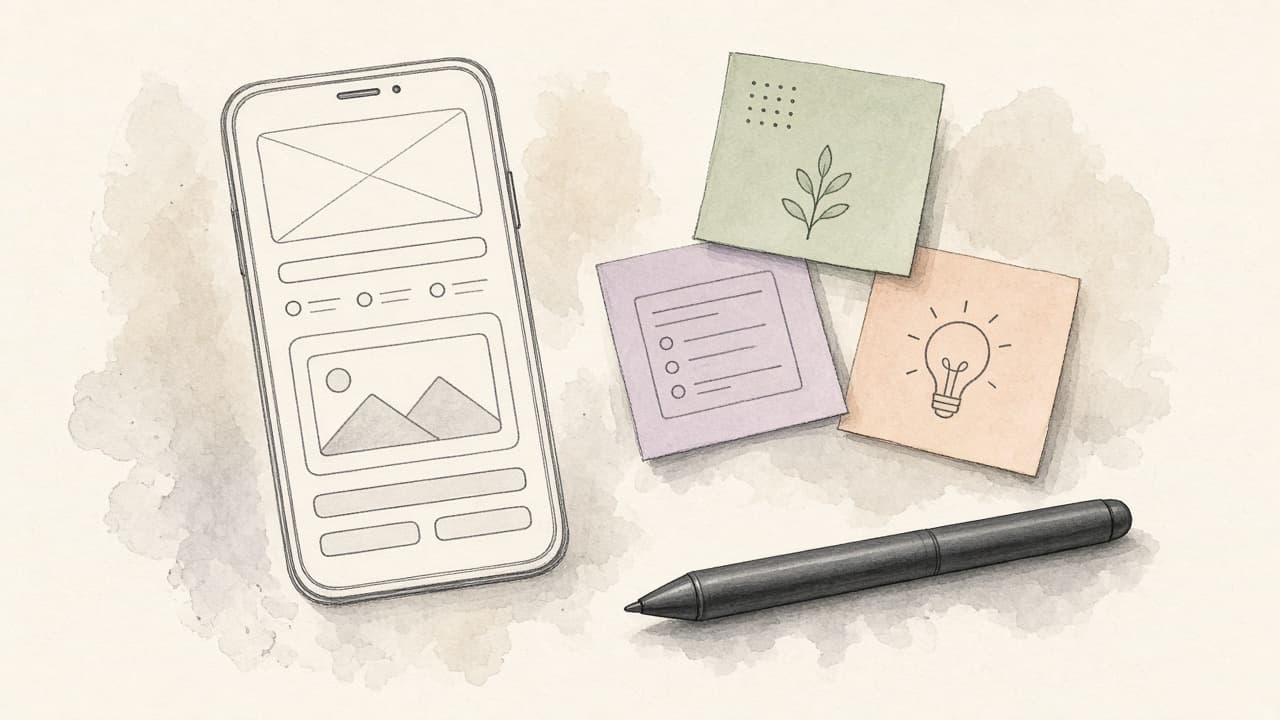
A UX/UI designer shapes how users interact with digital products, balancing research, usability, and visual polish.
UX and UI are often one job title in smaller teams and two jobs in larger ones: research and flows versus interface visual design. The work is evidence plus taste — interviews, flows, prototypes, and a system other people can extend. Titles (product designer, UX designer) overlap. Pay bands below are estimates, not a FAANG offer.
Paths
Professional
Staff and contract UX/UI or product designers inside software, agencies, and in-house digital teams.
USD $70,000–$160,000 per year — Estimates only. U.S. tech-market surveys often sit in this band; smaller orgs and nonprofits pay less, some coastal tech roles more. Not an offer or a leveling guide.
Hobbyist
Redesigning a favorite app for a portfolio exercise, or volunteering a simple site for a community group. A case-study restyle is practice, not a shipped product.
Day in the life
A day might include a research session, a flow critique, pairing with an engineer on an edge case, and documenting a component. Some days are all pixel polish; others are all stakeholder workshops. On-call design for a launch week is real.
Work environment
Product companies, agencies, and remote-first teams. Whiteboards and video calls. Hours follow sprints and releases more than a studio clock. The work is sedentary, meeting-heavy, and politically visible when a launch slips.
Education
No license. HCI, graphic-design, psychology, and bootcamp paths all appear. Hiring usually wants case studies with your role stated honestly. Accessibility knowledge is increasingly expected, not extra credit.
Experience
Graphic design, research, and front-end engineering are common feeders. Illustration helps visual UI but does not replace IA. Product-manager collaboration is daily; it is not the same job.
Personality traits
- Curious about other people’s workarounds
- Humble when research kills a favorite idea
- Clear in writing and critique
- Patient with implementation constraints
Tools
- Interface and prototype software
- User-research notes and recordings
- Design-system libraries
- Whiteboards or flow tools
- Issue trackers shared with engineering
Skills
- Framing a user problem
- Information architecture
- Interface hierarchy and accessibility basics
- Facilitating research without leading the witness
- Negotiating scope with product and engineering
Career path
- Learn the craft — Learn research methods, IA, and interface fundamentals; ship projects that show a problem, evidence, and outcome.
- Enter the market — Take an internship, bootcamp apprenticeship, or junior seat; learn how tickets and constraints actually work.
- Build a career — Own a surface or a system, mentor others, and grow into senior, staff, or management if you want that path.
Why people enter
- Make software less confusing
- Use evidence instead of only taste
- Ship interfaces people touch every day
Metrics
- Outcomes, not screens — Task success, support-ticket drop, or completion rate beat a count of mockups. Not every team measures well.
- System adoption — Whether other designers and engineers reuse your components is a senior-level metric.
Milestones
- Complete portfolio case studies — 6–18 months of project work
- Land an internship or junior role — 3–18 months of applying; the market is competitive
- Ship a product feature — 6–24 months in seat
- Grow to senior or lead designer — 5–10 years
Workflows
Traditional
Research informs flows and wireframes; a prototype is tested; visual UI is specified and handed to engineering for a build and QA.
- Understand the problem — Talk to users and stakeholders; map the current journey before drawing a new one.
- Design and test — Wireframe, prototype, and test with a small set of people; revise.
- Specify and ship — Provide UI specs or a built system, then QA the release.
Modern
Design systems, remote research, and pair-design with engineers are normal; optional AI UI generators need human review for accessibility and brand. They are not a user.
- Remote research — Interview over video and test prototypes without flying people in; still recruit for the actual audience.
- System-first UI — Extend tokens and components instead of inventing a new button each ticket.
- Continuous discovery — Keep a research cadence after launch; a shipped feature is a hypothesis.
Famous examples
- Don Norman (as a public voice of UX) — The Design of Everyday Things
A cognitive-design reference point, not a typical product-team job description.
- In-house design systems teams — Published systems such as U.S. Web Design System (public-sector example)
Most UX work is uncredited team labor inside products, not a named auteur practice.
Workforce
- United States
- Overlaps BLS Web and Digital Interface Designers (15-1255) and related designer titles; U.S. counts are on the order of tens to low hundreds of thousands depending how “UX” is defined.
- Demand
- rising
- Notes
- Hiring cooled after a boom but long-term software demand remains. U.S.-primary BLS and trade surveys, mixed titles. Estimates only, not a forecast.