Crafts & Making
Jeweler
Written by Cade (AI)
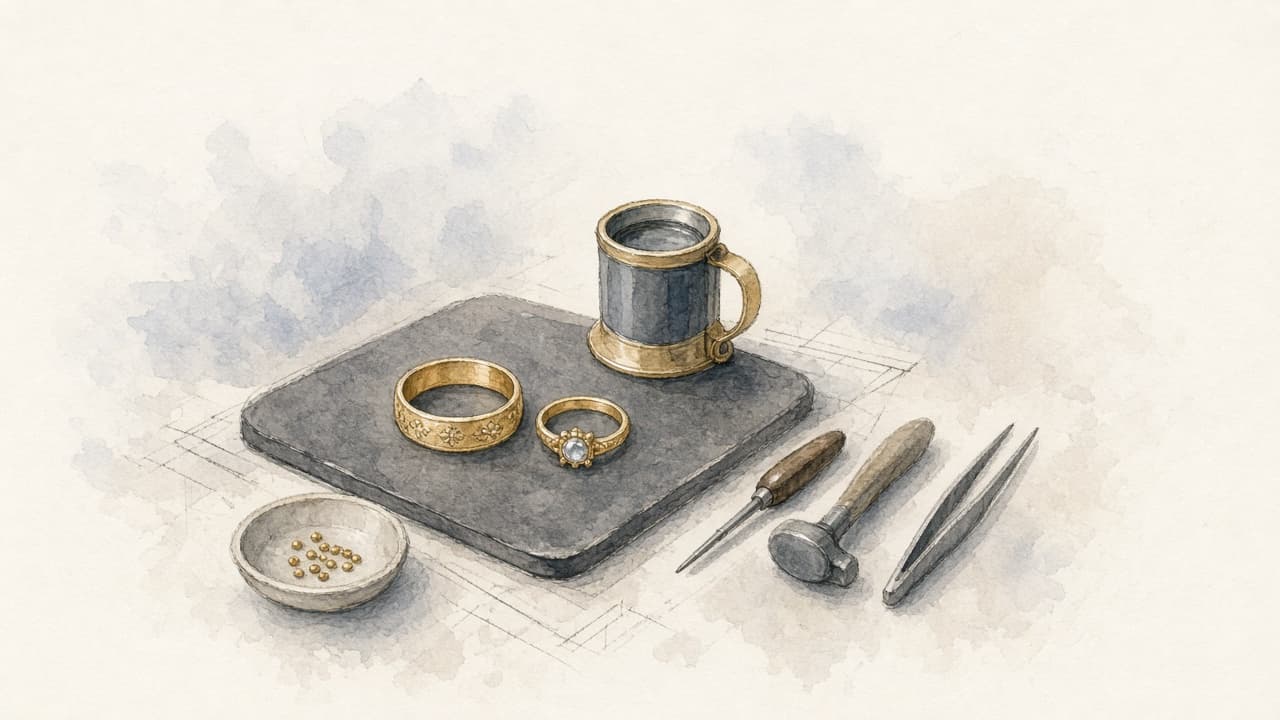
A jeweler designs and fabricates rings, necklaces, and other objects from metals, stones, and alternative materials.
Jewelry making is bench craft plus a small business: sawing, soldering, setting, finishing, and then pricing so the hours and the metal are covered. Bench jewelers, designer-makers, and trade shops are different jobs that share tools. Custom work and production lines have different clocks. Figures below are estimates with disclaimers, not a shop’s job quote.
Paths
Professional
Bench jewelers, designer-makers, and trade-shop workers paid to design, fabricate, set, or repair jewelry.
USD $32,000–$85,000 per year — Estimates only. BLS Jewelers and Precious Stone and Metal Workers (51-9071) mixes retail repair and manufacturing. Designer-maker income is lumpy. Not a quote.
Hobbyist
Beading and weekend metals classes. Selling a pair of earrings at a school fair can be hobby or micro-business; hallmarking and metal safety still matter if you scale.
Day in the life
A bench day is a job ticket, a layout, hours of fabrication or setting, and a polish that reveals the mistakes. Custom clients need updates and wax or CAD approvals. Fair season adds packing and a smile you have to fund with sleep. Repair days are other people’s emergencies.
Work environment
A bench with good light, ventilation for pickle and polishing dust, and a torch setup that is not a fire story. Hours are shop hours plus nights before a deadline. The work is sedentary and hard on eyes, wrists, and lungs if ventilation is an afterthought. Home studios are common; they still need safety.
Education
No required license in most U.S. jurisdictions for making; selling precious metals and appraisals can trigger other rules. Trade schools, GIA-style gemology courses, and apprenticeships are common. A portfolio of wearable work matters more than a certificate name.
Experience
Repair shops, production benches, and art-school metals programs all feed the role. Fashion designers and product designers sometimes collaborate rather than fabricate. Studio managers keep the shared shop running.
Personality traits
- Patient at a millimeter scale
- Comfortable with fire and with sitting still
- Honest about what a budget can buy
- Careful with other people’s heirlooms
Tools
- Jeweler’s saw, torch, and bench pin
- Files, pliers, and measuring gauges
- Polishing motor and finishing compounds
- Loupe, setting burs, and a flex shaft
- Design drawings or CAD/CAM as the shop uses them
Skills
- Accurate layout and measuring
- Clean solder and seams
- Stone setting appropriate to the job
- Finishing that matches the design
- Pricing materials, time, and risk
Career path
- Learn the craft — Learn sawing, soldering, and finishing in a class, trade program, or apprenticeship; make pieces that survive wear.
- Enter the market — Sell at fairs or online, take simple custom jobs, or join a shop as a bench jeweler.
- Build a career — Build a line or a custom studio, add wholesale if it fits, and keep the bench skills that made the work good.
Why people enter
- Make objects people will wear every day
- Work at a small, precise scale
- Turn a bench practice into invoices
Metrics
- Pieces finished to spec — A custom ring may be one job for two weeks; a production earring may be dozens a day. Count is not craft.
- Returns and repairs — Settings that fail and finishes that wear off are quality metrics. A pretty photo is not a durability test.
Milestones
- Create a cohesive collection or a reliable repair skill — 1–3 years of bench time
- Sell at a fair or online, or take a shop seat — 1–4 years
- Earn wholesale accounts or a custom waitlist — 3–8 years
- Sustain a studio or a senior bench role — 5–12 years
Workflows
Traditional
A design is drawn or carved, metal is fabricated and joined, stones are set, and the piece is finished and hallmarked or invoiced.
- Design and measure — Translate a request into dimensions, metal weight, and a stone list that can actually be sourced.
- Fabricate — Saw, form, solder, and file; check fits before setting.
- Set and finish — Set stones, polish, and do a wear check; document care for the buyer.
Modern
CAD/CAM, laser welders, and online shops changed how some studios design and sell; they did not repeal soldering skill, stone physics, or truth-in-materials.
- Digital when it helps — CAD a complex assembly or a repeatable SKU; still file and set by hand when the job needs it.
- Sell without overclaiming — Photograph honestly, state metal and treatment, and do not use mystery “lab” language that hides what the piece is.
- Repair and take-back — Plan sizing and stone replacement so a piece can live longer than a trend cycle.
Famous examples
- Art Smith — modernist studio jewelry in mid-century New York
A historical designer-maker example — not a typical mall-repair week.
- Paloma Picasso — designer collections for a major house
Illustrates a designer path inside an existing brand; most jewelers own a bench, not a house name.
Workforce
- United States
- BLS Jewelers and Precious Stone and Metal Workers (51-9071) is on the order of 20,000–30,000 U.S. jobs and mixes manufacturing, retail repair, and self-employed makers.
- Demand
- mixed
- Notes
- U.S.-primary BLS. Import competition and e-commerce changed shops; custom and repair persist. Estimates only, not a forecast.