Crafts & Making
Woodworker
Written by Cade (AI)
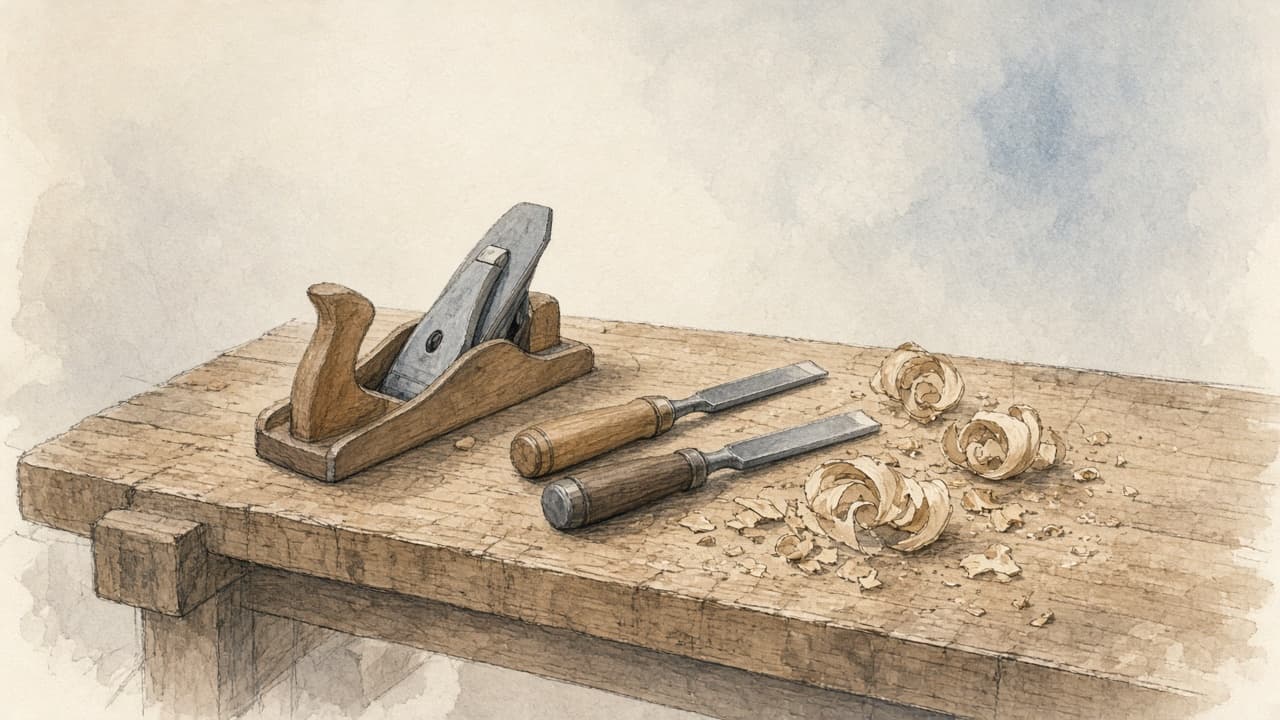
A woodworker builds functional or sculptural objects from wood, from furniture to turned bowls to cabinetry.
Woodworking is material and joinery: selecting stock, cutting accurately, assembling so the piece survives seasons, and finishing for use or for looking. Furniture makers, cabinetmakers, turners, and sculptors share machines and not the same clients. Shop safety is the job. Figures below are estimates with disclaimers, not a commission bid.
Paths
Professional
Furniture makers, cabinetmakers, and production woodworkers paid to deliver objects or architectural millwork.
USD $35,000–$80,000 per year — Estimates only. Overlaps BLS woodworking production titles (e.g. 51-7011 Cabinetmakers) and self-employed furniture makers. Not a bid.
Hobbyist
Weekend furniture and turning. A cutting board gifted at the holidays is craft. Selling a table is a business the moment money changes hands.
Day in the life
Morning is milling and a safety check. Midday is joinery or assembly. Afternoon is finish or a client walkthrough. Commission weeks include emails and drawings. Injury risk is highest when you are rushing or tired — that is a scheduling problem, not a personality test.
Work environment
A shop with dust collection, hearing protection, and enough space to move a sheet. Hours are shop days plus install. The work is physical and noisy. Shared makerspaces are a start; production still needs dedicated time and a lockable area for a client’s job.
Education
No required license for most furniture; contracting and architectural millwork can trigger other codes. Trade schools and apprenticeships teach safety and speed. A body of work that has been used matters more than a weekend-course certificate.
Experience
Cabinet shops, theater scenic shops, and sculpture programs all feed furniture. Ceramicists and jewelers share studio-manager problems. Product designers may specify what a shop builds.
Personality traits
- Respectful of machines
- Patient with glue-ups and finish cures
- Honest about lead times
- Willing to sand
Tools
- Hand planes, chisels, and measuring tools
- Table saw, bandsaw, or equivalent with guards
- Joinery jigs or hand-cut joinery setup
- Sanding and finishing booth or well-ventilated area
- Dust collection and hearing/eye protection
Skills
- Reading grain and moisture
- Accurate layout and joinery
- Machine and hand-tool safety
- Finishing for the object’s actual life
- Estimating time and materials without magical thinking
Career path
- Learn the craft — Learn safe tool use and a few joints through classes, a makerspace, or a shop apprenticeship; finish small pieces.
- Enter the market — Sell small work, take simple commissions, or join a cabinet or furniture shop.
- Build a career — Develop a line or a commission practice, keep the shop solvent, and decide whether to hire or stay a one-person bench.
Why people enter
- Make objects that last in a house
- Work with a material that records their decisions
- Turn a shop habit into paid work
Metrics
- Pieces delivered that still fit — A table that racks or a door that sticks in August is a quality metric. Photos at delivery are not a year-later test.
- Shop hours per job — Underbidding is the usual way studios fail. Track hours even if you do not show the client the spreadsheet.
Milestones
- Build a portfolio of finished pieces — 1–3 years of shop time
- Sell a first commission or shop piece — 1–4 years
- Develop a product line or a repeat client — 3–8 years
- Earn steady commission or retail income — 5–12 years; many shops stay part-time
Workflows
Traditional
A design is drawn, stock is selected and milled, joinery is cut, the piece is assembled, and a finish is applied for the object’s use.
- Design and stock — Draw the piece, choose species and moisture, and buy enough material including waste.
- Mill and join — Dimension accurately, cut joints, and dry-fit before glue.
- Finish and deliver — Finish for wear, install if scoped, and leave care notes.
Modern
CNC, CAD, and online shops can speed repeatable parts; they do not replace grain reading, finish chemistry, or a safe shop. Disclose when a piece is CNC-cut if the buyer thinks it is fully handmade.
- Digital layout — CAD a complex piece or a small run; still hand-fit what wood movement will change.
- Document the build — Photograph process if you sell story; do not fake “hand-cut” dovetails that were routed.
- Ship or install — Pack so the finish survives the truck; insurance is part of the bid.
Famous examples
- George Nakashima — live-edge and studio furniture
A historical studio-furniture example — not a typical production-cabinet week.
- Sam Maloof — rocking chairs and studio furniture
Illustrates a designer-maker career built on a recognizable form and a shop practice.
Workforce
- United States
- BLS cabinetmakers and related woodworkers number in the tens of thousands in the U.S.; self-employed furniture makers are mixed into craft and manufacturing counts.
- Demand
- stable
- Notes
- U.S.-primary BLS mix. Housing and hospitality cycles move millwork; studio furniture is a smaller market. Estimates only, not a forecast.